
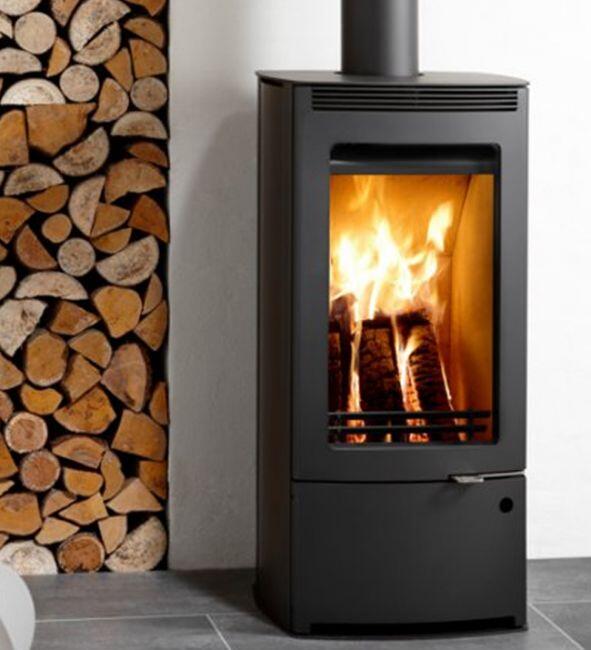
How Does A Log Burner Work ?
How Does A Log Burner Work ? How the get the best out of your wood stove
Getting the best efficiency from a log burner starts with using the right fuel. Always burn dry, well-seasoned wood with a moisture content below 20%. Wet logs waste heat because much of the energy is used to boil off water, causing poor heat output, excess smoke, tar build-up and dirty glass. Hardwood such as oak, ash, beech and birch usually burns longer and hotter than softwood, although properly dried softwood can be useful for kindling.
Air flow is vital
Good airflow is also essential. When lighting the stove, open the air vents fully to get a strong flame quickly. Once the fire is burning well, reduce the airflow gradually, but never shut it down so much that the fire smoulders. A bright, active flame is more efficient than a slow, smoky burn. Smouldering fires create soot, waste fuel and increase chimney deposits.
Don’t overload your stove!
Load the stove correctly. Do not overfill it, as this can restrict airflow and reduce efficiency. Add one or two logs at a time and allow enough space for air to circulate. Smaller logs usually burn more cleanly than very large pieces because they catch faster and reach a better temperature.
Keep the stove and chimney clean. Empty excess ash regularly but leaving a thin ash bed can help maintain heat in some stoves. Clean the glass and check the door seals, because poor seals allow uncontrolled air into the stove and reduce performance. The chimney should be swept at least once a year, or more often if the stove is heavily used.
Finally, use the stove thermometer if you have one. Running the burner in the correct temperature range helps avoid both under-burning and over-firing. A well-maintained stove, dry logs and careful airflow control will give more heat, use less fuel and keep the appliance safer for longer.
Like to discuss your options?
Please do get in touch and one of our expert engineers (HETAS) registered will be happy to assist you.